6 Ocak 2015 Salı

Drug Enhances Brain Signaling by Factor of 1,000

from

BIOENGINEER.ORG http://bioengineer.org/drug-enhances-brain-signaling-by-factor-of-1000/


Proteins play a fundamental role in almost all biological processes. They consist of chains composed of up to 20 different amino acids, and their composition, structure and function are controlled by the genetic code. Researchers are now attempting to rewrite the core function of proteins by making alterations in their molecular composition, for example. By means of advanced chemical-biological techniques, scientists are capable of designing new chemical compounds that overcome nature’s limitations.


Drug Enhances Brain Signaling by Factor of 1,000


The capacity to manipulate proteins has led to important breakthroughs in biotechnology and biomedicine.


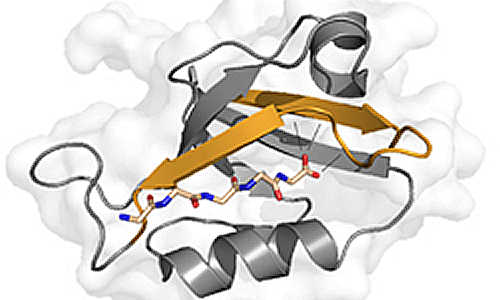
In the current study, the researchers studied receptors that play a key role in the brain in health and disease. Then they designed new chemical compounds – peptides – with superior effect on the receptors’ interaction with gephyrin, a protein that is vital for the brain:


The capacity to manipulate proteins has led to important breakthroughs in biotechnology and biomedicine. We have, among other things, studied the so-called GABA receptors which are important targets for drugs for the treatment of mental disorders, e.g. benzodiazepines for the treatment of anxiety and insomnia. We have, more specifically, studied the receptors’ interaction with the protein gephyrin. Not only to learn more, at a structural level, about a key interaction in the brain, but also to see whether we could turn it up or down. We have very successfully achieved the latter – we can document an inhibition, which, at best, is more than 1,000 times stronger than what is seen in nature, says Postdoc Hans Maric. He is part of the Center for Biopharmaceuticals at the University of Copenhagen, which is headed by Professor Kristian Strømgaard.


The new research findings have just been published in Nature Communications and Angewandte Chemie. The first article describes the initial work with mapping glycine and GABA receptors, respectively, and how the two receptor types interact differently with gephyrin. The other article describes the molecular restructuring that has created a neuro-active peptide that is 1,000 times more powerful that what nature offers.


Story Source:


The above story is based on materials provided by University of Copenhagen – The Faculty of Health and Medical Sciences.


Skin Microbes Trigger Specific Immune Responses

from

BIOENGINEER.ORG http://bioengineer.org/skin-microbes-trigger-specific-immune-responses/


New research in mice shows that the immune system in the skin develops distinct responses to the various microbes that naturally colonize the skin, referred to as commensals. A team led by scientists at the National Institute of Allergy and Infectious Diseases (NIAID), part of the National Institutes of Health, found that each type of microbe triggers unique aspects of the immune system, suggesting that immune cells found in the skin can rapidly sense and respond to changes in microbial communities. These findings help clarify the protective role of skin commensals and may help explain how variation in the microbes at different skin sites contributes to skin disorders.


Scientists at three NIH institutes collaborate to study the role of “good” skin bacteria in health and disease.


The skin is home to diverse microbial communities that can change over time. In the current study, investigators found that colonizing mice with different commensals leads to production of commensal-specific immune cells. They describe in detail how the common skin commensal Staphylococcus epidermidis enhances immune responses against pathogens without causing inflammation. Colonizing the skin of mice with S. epidermidis increased the number of CD8+ T immune cells, which produced the chemical messenger IL-17A. Dendritic cells, another type of immune cell, played a key role in generating this specific, non-inflammatory response. Mice colonized with S. epidermidis were protected against infection with a disease-causing fungus. Depleting CD8+ T cells or neutralizing IL-17A removed this protective effect.


The ability of different microbes to trigger distinct aspects of the immune system without causing inflammation opens the possibility of discovering new adjuvants—immune-boosting substances that may be added to vaccines or medications. Future research will focus on identifying specific chemical messengers and understanding how they stimulate the immune system.


Story Source:


The above story is based on materials provided by NIH/National Institute of Allergy and Infectious Diseases.


How bacteria control their size

from

BIOENGINEER.ORG http://bioengineer.org/how-bacteria-control-their-size/


By monitoring thousands of individual bacteria scientists discovered how they maintain their size from generation to generation


Scientists have traditionally studied bacteria in large numbers, not individually. Working with tens of millions of cells in a culture flask, they tracked their growth by looking at how much the cells dimmed light passing through a tube.


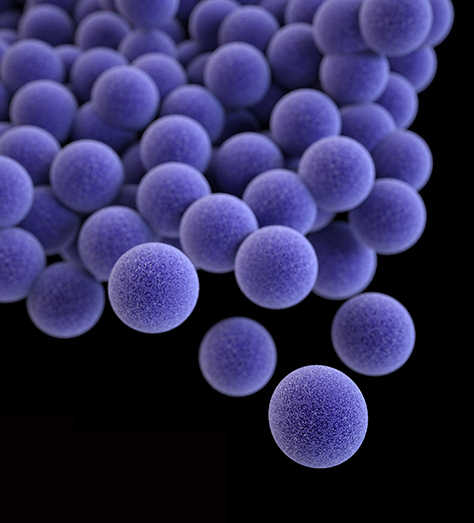
Methicillin-resistant Staphylococcus aureus


Methicillin-resistant Staphylococcus aureus, or MRSA, are so uniform in size they look like they were made in a factory. How do the bacteria manage to keep their size so uniform? Photo Credit:CDC


Using this method, scientists learned that populations of bacteria grow exponentially, doubling in mass at regular time intervals. And so, not unreasonably, they assumed that individual cells would do the same, dividing only when they have doubled in size.


In the Dec. 24 online issue of Current Biology a group of scientists led by Suckjoon Jun of the University of California-San Diego, and including Petra Levin, PhD, associate professor of biology in Arts & Sciences at Washington University in St. Louis, report that this hypothesis was incorrect.


“Even though on average it is true that mass doubles,” Levin said, “when you look at individual cells it becomes apparent that something else is going on.”


E. coli growing in a “mother machine” that lets scientists study the reproduction of individual bacteria. The machine consists of growth channels at right angles to a trench that is continually flushed with growth medium.


Instead of examining populations of cells growing in a flask or test tube, the Jun group instead used a microfluidics device called a “mother machine” to follow hundreds of thousands of individual cells from birth to division.


They found that rather than doubling in size every generation, each cell added the same volume (or mass; the term reflects the measurement technique). Crucially a cell that was small added the same volume as a cell that was large.


Why is this the rule? “Although this might seem counter-intuitive, over many generations this rule ensures that cells in a population maintain a constant size,” Levin said.


By adding a constant volume before they divide, randomly sized bacteria quickly approach a common size. In this example, a cell that is bigger than average arrives at the common size in only a few replications.


“This study really shows how new technologies, in this case the development of the ‘mother machine’ to visualize single bacteria in real time, can lead to new and unexpected answers to old problems,” Levin said.


“Pinning down the growth rule is important,” she added, “because it provides clues to the underlying biochemical mechanism that ultimately controls growth. The mechanism is probably essential — or nearly so — and thus good target for new antimicrobials.”


“Surprisingly little is known about biological size control in general,” Levin said.


“Why are we the size we are? Why are our organs the size they are? Why are the cells in those organs a stereotypical size? What regulates that?”


“We take all this for granted,” she said, “but really, very little of it is understood.”


5 Ocak 2015 Pazartesi

Stretchy synthetic skin has sense of touch and warmth

from

BIOENGINEER.ORG http://bioengineer.org/stretchy-synthetic-skin-has-sense-of-touch-and-warmth/


The first prosthetic skin to simulate the sense of touch is being developed by researchers at Seoul National University. The smart artificial skin can even tell if a baby’s diaper is wet.


4 Ocak 2015 Pazar

Random Mutations: Predominant Role in Cancer

from

BIOENGINEER.ORG http://bioengineer.org/random-mutations-predominant-role-in-cancer/


Scientists from the Johns Hopkins Kimmel Cancer Center have created a statistical model that measures the proportion of cancer incidence, across many tissue types, caused mainly by random mutations that occur when stem cells divide. By their measure, two-thirds of adult cancer incidence across tissues can be explained primarily by “bad luck,” when these random mutations occur in genes that can drive cancer growth, while the remaining third are due to environmental factors and inherited genes.


cancer


“All cancers are caused by a combination of bad luck, the environment and heredity, and we’ve created a model that may help quantify how much of these three factors contribute to cancer development,” says Bert Vogelstein, M.D., the Clayton Professor of Oncology at the Johns Hopkins University School of Medicine, co-director of the Ludwig Center at Johns Hopkins and an investigator at the Howard Hughes Medical Institute.


“Cancer-free longevity in people exposed to cancer-causing agents, such as tobacco, is often attributed to their ‘good genes,’ but the truth is that most of them simply had good luck,” adds Vogelstein, who cautions that poor lifestyles can add to the bad luck factor in the development of cancer.


The implications of their model range from altering public perception about cancer risk factors to the funding of cancer research, they say. “If two-thirds of cancer incidence across tissues is explained by random DNA mutations that occur when stem cells divide, then changing our lifestyle and habits will be a huge help in preventing certain cancers, but this may not be as effective for a variety of others,” says biomathematician Cristian Tomasetti, Ph.D., an assistant professor of oncology at the Johns Hopkins University School of Medicine and Bloomberg School of Public Health. “We should focus more resources on finding ways to detect such cancers at early, curable stages,” he adds.


In a report on the statistical findings, published Jan. 2 in Science, Tomasetti and Vogelstein say they came to their conclusions by searching the scientific literature for information on the cumulative total number of divisions of stem cells among 31 tissue types during an average individual’s lifetime. Stem cells “self-renew,” thus repopulating cells that die off in a specific organ.


It was well-known, Vogelstein notes, that cancer arises when tissue-specific stem cells make random mistakes, or mutations, when one chemical letter in DNA is incorrectly swapped for another during the replication process in cell division. The more these mutations accumulate, the higher the risk that cells will grow unchecked, a hallmark of cancer. The actual contribution of these random mistakes to cancer incidence, in comparison to the contribution of hereditary or environmental factors, was not previously known, says Vogelstein.


To sort out the role of such random mutations in cancer risk, the Johns Hopkins scientists charted the number of stem cell divisions in 31 tissues and compared these rates with the lifetime risks of cancer in the same tissues among Americans. From this so-called data scatterplot, Tomasetti and Vogelstein determined the correlation between the total number of stem cell divisions and cancer risk to be 0.804. Mathematically, the closer this value is to one, the more stem cell divisions and cancer risk are correlated.


“Our study shows, in general, that a change in the number of stem cell divisions in a tissue type is highly correlated with a change in the incidence of cancer in that same tissue,” says Vogelstein. One example, he says, is in colon tissue, which undergoes four times more stem cell divisions than small intestine tissue in humans. Likewise, colon cancer is much more prevalent than small intestinal cancer.


“You could argue that the colon is exposed to more environmental factors than the small intestine, which increases the potential rate of acquired mutations,” says Tomasetti. However, the scientists saw the opposite finding in mouse colons, which had a lower number of stem cell divisions than in their small intestines, and, in mice, cancer incidence is lower in the colon than in the small intestine. They say this supports the key role of the total number of stem cell divisions in the development of cancer.


Using statistical theory, the pair calculated how much of the variation in cancer risk can be explained by the number of stem cell divisions, which is 0.804 squared, or, in percentage form, approximately 65 percent.


Finally, the research duo classified the types of cancers they studied into two groups. They statistically calculated which cancer types had an incidence predicted by the number of stem cell divisions and which had higher incidence. They found that 22 cancer types could be largely explained by the “bad luck” factor of random DNA mutations during cell division. The other nine cancer types had incidences higher than predicted by “bad luck” and were presumably due to a combination of bad luck plus environmental or inherited factors.


“We found that the types of cancer that had higher risk than predicted by the number of stem cell divisions were precisely the ones you’d expect, including lung cancer, which is linked to smoking; skin cancer, linked to sun exposure; and forms of cancers associated with hereditary syndromes,” says Vogelstein.


“This study shows that you can add to your risk of getting cancers by smoking or other poor lifestyle factors. However, many forms of cancer are due largely to the bad luck of acquiring a mutation in a cancer driver gene regardless of lifestyle and heredity factors. The best way to eradicate these cancers will be through early detection, when they are still curable by surgery,” adds Vogelstein.


Story Source:


The above story is based on materials provided by Johns Hopkins Medicine.


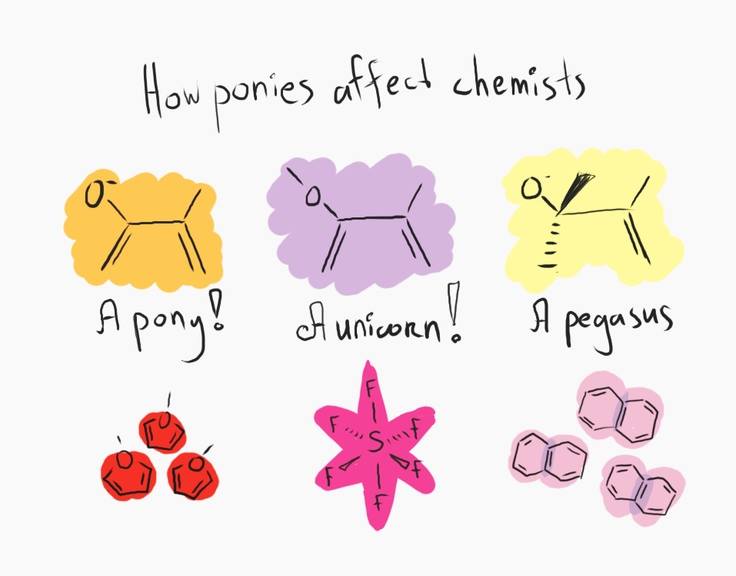
How Ponies Affect Chemists

from

BIOENGINEER.ORG http://bioengineer.org/how-ponies-affect-chemists/


Look like your Chem class notes?


how affect chemist


Patterns of RNA Regulation in the Nuclei of Plants

from

BIOENGINEER.ORG http://bioengineer.org/patterns-of-rna-regulation-in-the-nuclei-of-plants/


When the human genome was first sequenced, experts predicted they would find about 100,000 genes. The actual number has turned out to be closer to 20,000, just a few thousand more than fruit flies have. The question logically arose: how can a relatively small number of genes lay the blueprint for the complexities of the human body?


rna-pattern-2


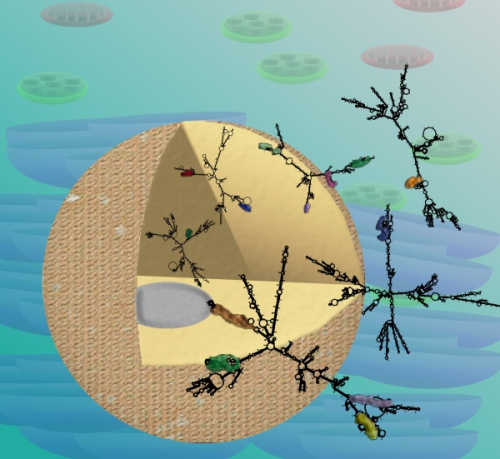
The Gregory lab catalogued all the RNA binding protein locations and secondary structure in plant nuclei. Photo Credits: Upenn


The explanation is that genes are subject to many and varied forms of regulation that can alter the form of that protein and can determine whether and how much of a gene product is made. Much of this regulation occurs during and just after DNA is transcribed into RNA.


In a new study done in plants, University of Pennsylvania biologists built on earlier work in which they cataloged all the interactions that occur between RNA and the proteins that bind to it. This time, they looked exclusively at these interactions in the nuclei, and simultaneously obtained data about the nuclear RNA molecules’ structure. By combining these datasets, their findings give a global view of the patterns that can affect the various RNA regulatory processes that occur before these molecules move into the cytoplasm, where they are translated into the proteins that make up a living organism.


In addition, the researchers have provided a vast, publically available set of data that other scientists can use to address questions about any genes and regulatory mechanisms that interest them, gaining a better understanding of the dynamics of the journey from DNA to protein.


Brian D. Gregory, an assistant professor in Penn’s School of Arts & Sciences’ Department of Biology, was senior author on the work, which will appear in the journal Molecular Cell. Sager J. Gosai, a research specialist, and Shawn W. Foley, a graduate student, both members of Gregory’s lab, were co-first authors. Additional contributors from Penn included Ian M. Silverman, a graduate student in the Gregory lab, along with Fevzi Daldal, a professor in the Department of Biology and Nur Selamoglu of the Daldal lab. The Penn researchers teamed with Emory University’s Dongxue Wang and Roger B. Deal and University of Arizona’s Andrew D. L. Nelson and Mark A. Beilstein to conduct the study.


Earlier this year in Genome Biology, Gregory’s team reported on a method they developed to obtain a complete catalog of the interactions in live organisms between RNA and RNA-binding proteins, or RBPs, which interact with RNA transcripts to repress, enhance or otherwise alter gene expression in a cell-type specific manner. The technique is called PIP-seq, for protein interaction profile sequencing. Their initial demonstration of PIP-seq identified the full complement of RBP interaction sites in a human cell line.


In the current work, they used the commonly studied plant Arabidopsis thaliana to map out all of the RBP interaction sites as well as compile a full look at the secondary structure of the RNA transcripts. Unlike the first study, which looked at all the RNA in the cell, a set of material known as the transcriptome, this study looked only in the nucleus.


“By focusing specifically on the nucleus we can get away from all of the features on RNA molecules that are associated with the process of translation into proteins, which occurs in the cytoplasm,” Gregory said.


The researchers extracted nuclei from 10-day-old Arabidopsis seedlings. They performed PIP-seq and also obtained information on the secondary structure of the RNA—how the strands of RNA fold, loop or bind together.


Focusing on sections of RNA that bind to RBPs, the team found that these sequences have been conserved over evolutionary time and are likely playing an important function in gene regulatory mechanisms.


The scientists also found a strong inverse relationship between patterns of RBP binding and secondary structure.


“When structure is low, proteins tend to bind those regions and when structure is high, RBPs tend to not bind those regions,” Gregory said. “Time and time again, we’ve seen that the structural context, and not just the RNA sequence, is a selective force in RBP binding.”


Another significant finding was unique patterns of RBP binding and structure present around the start codon of each messenger RNA transcript, which is where a cell’s protein-making machinery begins the process of making RNA in proteins.


“This is suggesting that there is a regulatory event happening here even before the RNA comes out of the nucleus and engages with the translation machinery,” Gosai said. “It’s an exciting place for future studies to start with and figure out what regulation events are happening in the nucleus.”


Two key forms of transcript regulation are alternative splicing, in which pieces of RNA undergo a cut-and-paste process to generate new sequences that can code for various proteins, and alternative polyadenylation, which alters where a transcript ends and an adenine “tail” is added, a process that can enhance either stabilization or degradation of the RNA molecule.


In their analysis, the Penn biologists found that RBP-binding sites and certain patterns of secondary structure were much more common at sites where alternative splicing and alternative polyadenylation occur.


“In humans, almost 95 percent of genes are alternatively spliced, and the number is at least 60 percent in plants,” said Foley. “To see high levels of RBP binding and an interplay with secondary structure at sites of alternative splicing and polyadenylation in plants is good indication of where and how regulation is occurring to produce different proteins from one RNA sequence.”


As in their previous study using PIP-seq, Gregory and his colleagues identified recurring patterns, known as “motifs,” of RNA sequences at sites that tended to be bound by certain RBPs. It’s possible, the researchers noted, that these groups of RBPs could bind functionally-related genes to coordinate their regulation.


Finally, the team zoomed in on one RBP-bound sequence motif that was particularly abundant and found that it interacted with an RBP called CP29A.


“This protein was known to bind RNA in the chloroplast, but we were able to identify it as a nuclear RBP for the first time,” Foley said, suggesting CP29A may be an important regulatory factor in both organelles.


To follow up on this work, the Penn scientists will examine how RNA regulation differs in plant tissues at different developmental stages. They also plan to use PIP-seq and structural analyses to study other types of organisms.


“Now that we’ve found beautiful patterns that mark alternative splicing and other events that shape the protein-coding capacity of plants, we’re going to go in and identify the proteins that lead to those,” Gregory said. “And eventually we’d like to go into humans and other organisms and ask if we see similar patterns.”


Story Source:


The above story is based on materials provided by University of Pennsylvania.